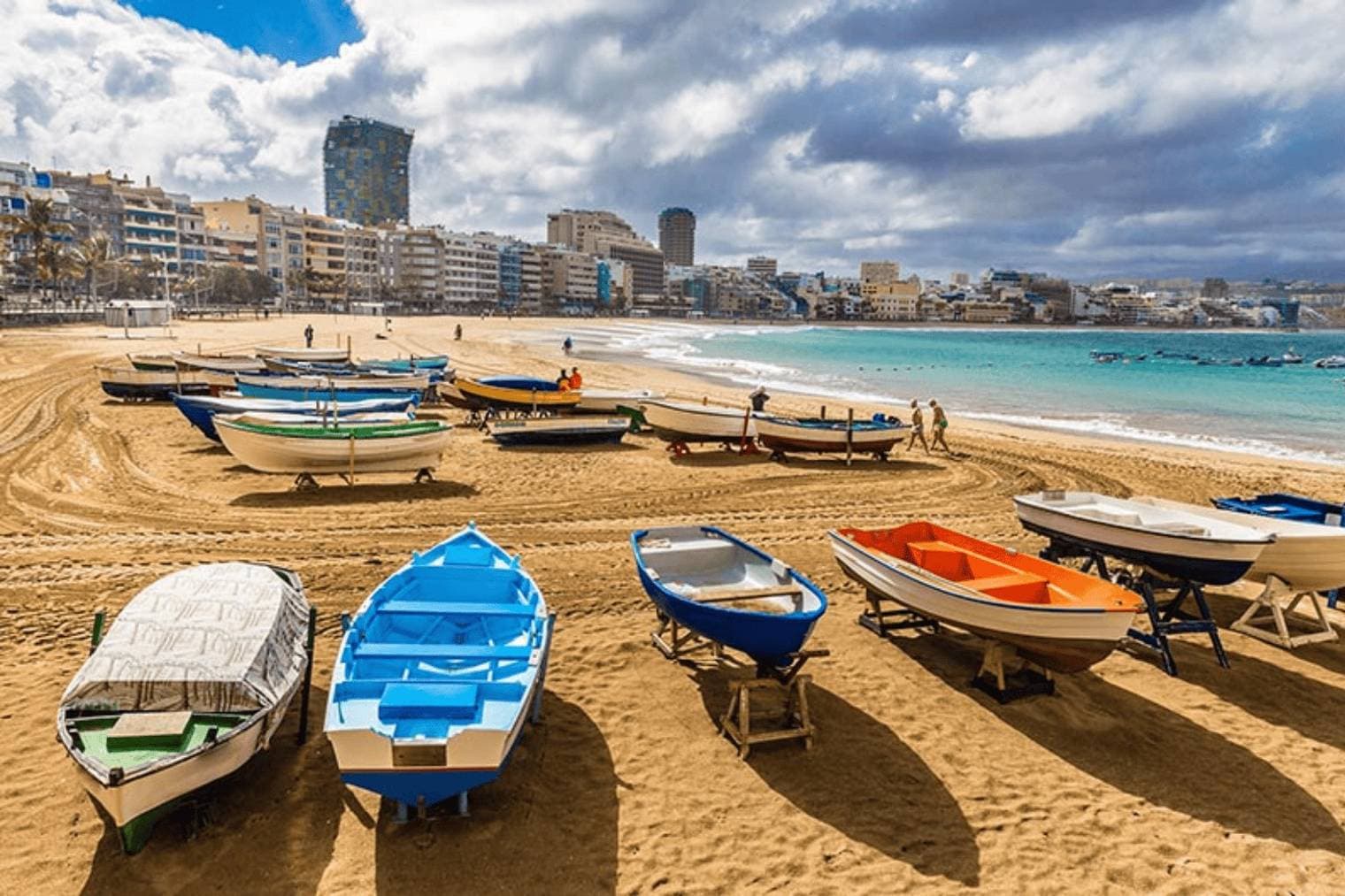
Few cities in Europe have a beach like Playa de Las Canteras on their doorstep. Just over three kilometres of golden sand curve along the western side of Las Palmas de Gran Canaria, sheltered for much of their length by a natural reef. Locals swim here before work, families spend whole Sundays on the sand, surfers paddle out at the southern end and, at sunset, half the city seems to stroll along the promenade. Here is what you need to know to enjoy it like someone who lives here.
La Barra: the reef that keeps the water calm
The secret of Las Canteras is La Barra, a natural sandstone reef that runs parallel to the shore about 200 metres out, for roughly two kilometres. It breaks the force of the Atlantic swell, so the northern and central parts of the beach behave more like a huge natural pool than an ocean beach. On most days the water inside the reef is calm, clear and shallow enough for relaxed swimming, even if you are not a confident swimmer.
At low tide parts of the reef emerge from the water and you will see gulls resting on the rocks. Strong swimmers sometimes swim out to it, but the currents around and beyond La Barra can be serious, so only do this in calm conditions, never alone, and stay inside the reef if in doubt. Always follow the lifeguards' flags and instructions.
- Check the tide times: at high tide the sand narrows considerably, while at low tide the shallows widen and rock pools appear.
- Water shoes are useful on the rocky patches near Playa Chica and La Puntilla.
Snorkeling around Playa Chica
You do not need a boat to snorkel in Las Palmas. The sheltered water inside La Barra has rocky bottoms, patches of seagrass and a surprising variety of fish, from shoals of silvery sea bream to colourful parrotfish, known locally as vieja. Around Playa Chica, in the central part of the beach near the rock formation called Peña de la Vieja, the bottom is varied and the water usually calm, which makes it the classic spot to put on a mask for the first time.
Mornings are often best, before the wind picks up and while the water is at its clearest. Bring your own mask and snorkel or look for the dive centres along the promenade, which rent equipment and run guided snorkeling and introductory dives. The marine environment here is protected: look but do not touch, do not stand on the reef and never take shells, stones or animals home.
- Wear a rash vest or T-shirt: the sun on your back is stronger than you think while snorkeling.
- Calm, sunny mornings usually give the best visibility.
Surfing at La Cícer
Towards the southern end, near the Auditorio Alfredo Kraus, the reef disappears and the Atlantic arrives with full force. This stretch, called La Cícer, is one of the best-known urban surf spots in the Canary Islands, with waves for much of the year and a relaxed atmosphere in the water.
Several surf schools along this part of the promenade offer lessons and board hire for all levels, which makes La Cícer a great place for a first lesson. If you already surf, respect the local etiquette, as the peaks can get crowded at weekends and in the late afternoon. Swimmers should take more care here than in the north: without the reef's protection, waves and currents are much stronger.
The promenade and the best sunsets
The Paseo de Las Canteras runs along the whole beach, from La Puntilla in the north to the auditorium in the south, and it is completely car-free. Early in the morning it belongs to runners and dog walkers; later it fills with café terraces, ice-cream shops and people of every age taking their daily stroll. Walking its full length takes about 40 minutes at an easy pace, and it is the best possible introduction to the rhythm of the city.
The beach faces west, so the sun sets over the ocean. On clear evenings you can even make out the silhouette of Mount Teide on neighbouring Tenerife above the horizon. Find a seat on a terrace or on the sea wall half an hour before sunset and watch the sky change colour: it is a ritual locals never seem to tire of.
When to go and practical tips
Las Canteras is a year-round beach. The air is mild in every season and the sea ranges from around 19 °C in late winter to about 23–24 °C in September and October. In summer the trade winds sometimes bring a layer of morning cloud over the north of the island, which often thins out during the day, so do not be put off by a grey start.
Weekday mornings are the quietest time; sunny Sundays and public holidays bring local families out in force, especially in the central stretch. You will find lifeguards and beach facilities along the main stretches and cafés all along the promenade, so a towel, water and sun protection are all you need. Morada Mágica is just 200 metres from the sand, about three minutes on foot, so you can pop back for lunch or a siesta and return for the sunset.
- Go early at weekends if you want a quiet spot near the water.
- Take only what you need to the beach and keep valuables at home.
- The sun is strong all year, even on cloudy days: use a high-factor sunscreen.
Frequently asked questions
Is Las Canteras good for children and less confident swimmers?
Yes. The northern and central parts of Playa de Las Canteras are sheltered by a natural reef called La Barra, so the water there is usually calm and shallow. Families with young children tend to prefer the stretch between La Puntilla and Playa Chica. Always follow the lifeguards' flags.
Where can you surf at Las Canteras?
Surfing is concentrated at La Cícer, the southern stretch of Playa de Las Canteras near the Auditorio Alfredo Kraus, where there is no reef to stop the waves. Several surf schools there offer lessons and board hire for beginners.
Can you swim at Las Canteras in winter?
Yes. The sea off Las Palmas stays at roughly 19–20 °C even in the coolest months and daytime air temperatures are usually above 20 °C, so many locals and visitors swim all year round.
How long is Playa de Las Canteras?
Playa de Las Canteras is just over three kilometres long, with a car-free promenade, the Paseo de Las Canteras, running along its entire length.