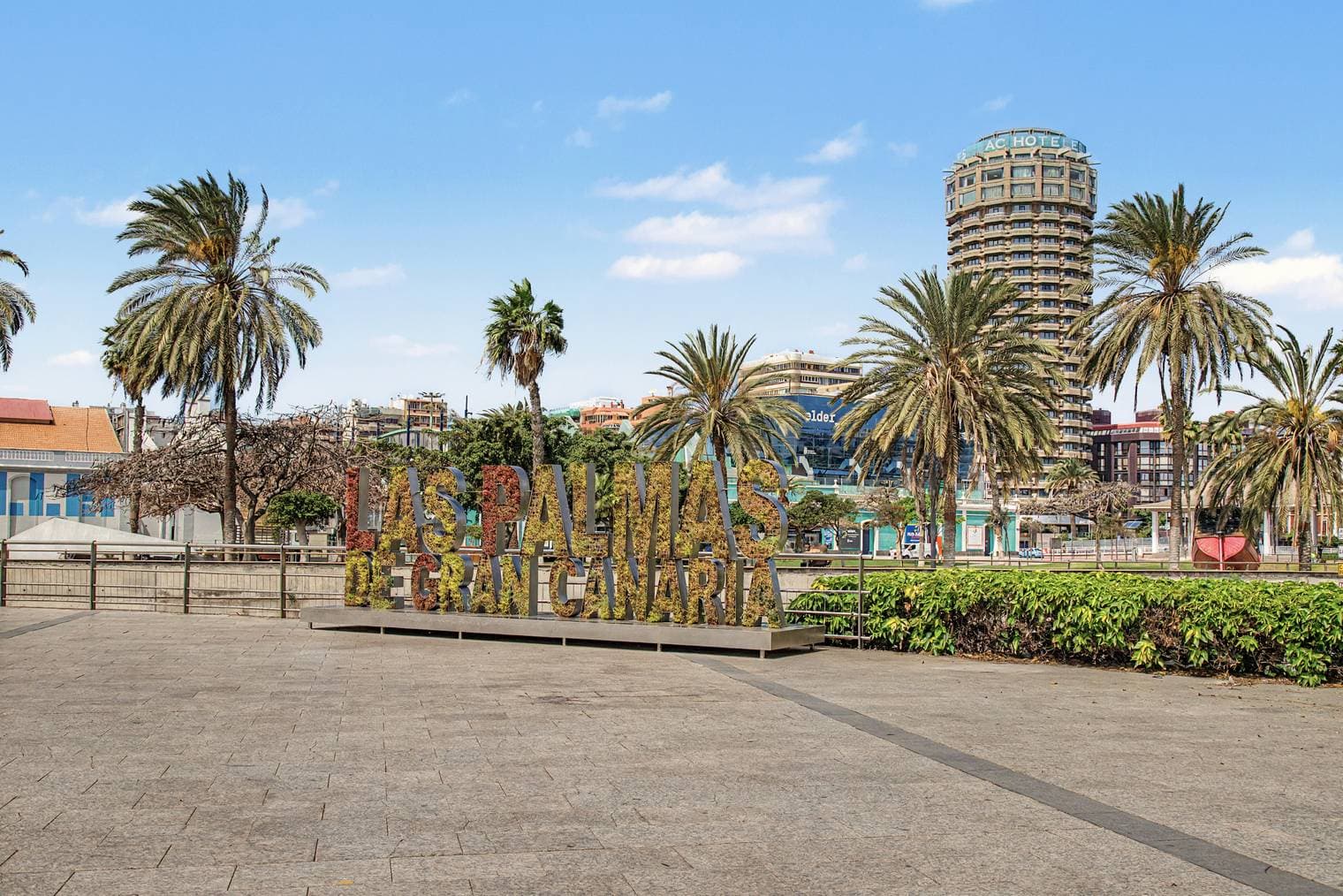
Santa Catalina is where Las Palmas meets the world. Squeezed between the port and Las Canteras beach, the neighbourhood grew up around the docks at the end of the nineteenth century, when ships from Britain, Africa and the Americas made the city one of the great crossroads of the Atlantic. That cosmopolitan spirit is still here: in the café terraces of its central square, in the market stalls and in the many languages you hear on the street. To the north lies La Isleta, a volcanic peninsula with a strong local identity; to the south, Guanarteme, a residential, surf-loving barrio. Here is how to explore them on foot.
Parque Santa Catalina, the heart of the area
Parque Santa Catalina is less a park than a large open square lined with palm trees, café terraces and kiosks. It is the neighbourhood's meeting point: locals reading the paper, cruise passengers strolling in from the port, chess players and families with children. It is also one of the city's main stages for big events, and in recent years it has been the main venue of the Las Palmas Carnival, one of the most spectacular in Spain.
The square is just 200 metres from the studio, which makes it the natural starting point for any walk. The underground bus station beneath it connects you with the rest of the city and the island, including the direct bus to the airport.
Museo Elder and the port
On one side of the square stands the Museo Elder de la Ciencia y la Tecnología, housed in a historic port building that once belonged to the British shipping company Elder Dempster. Inside there are four floors of hands-on exhibits, a planetarium, a 3D cinema and temporary exhibitions, which make it a perfect plan for a windy afternoon or a day with children. It usually opens from Tuesday to Sunday and closes on Mondays; check the museum's website for current hours.
Beyond the museum lies the Puerto de La Luz, one of the busiest ports in the Atlantic, with its cruise terminal and marina. A stroll along the waterfront at dusk, watching the ships come and go, is a reminder of how much the sea has shaped this city.
Mercado del Puerto: tapas under an iron roof
A few blocks away, on Calle Albareda, the Mercado del Puerto is a modernist wrought-iron market hall built in 1891. Some stalls still sell fresh produce, but today it is best known as a gastronomic market, with around thirty stalls serving tapas, fish, Canarian cheeses, international dishes, wine and beer. On Thursday, Friday and Saturday evenings it is one of the liveliest spots in the city.
Order a few small plates from different stalls and share them at the high tables: it is the easiest way to taste a bit of everything. Opening hours vary by stall and by day, so check before you go if you have a specific meal in mind.
La Puntilla and La Isleta
At the northern end of Las Canteras, La Puntilla is the old fishermen's corner of the beach, with small boats on the sand and simple restaurants specialising in fish and seafood. It is the place to try grilled vieja (parrotfish) or the catch of the day with papas arrugadas and mojo, ideally at a table facing the sea.
Behind it rises La Isleta, once a separate volcanic island and now joined to the city, with a proud working-class character and streets full of traditional bars. On its edge stands the Castillo de la Luz, the city's oldest fortress, which now houses the art collection of the Martín Chirino Foundation. Further north, the wild bay of El Confital offers a natural contrast to the city beach, with views back over Las Palmas. Parts of La Isleta's volcanic interior are restricted military land, so stick to marked paths and public areas.
Guanarteme and the southern end
At the opposite end of Las Canteras, Guanarteme is a lively residential barrio where surfers, students and long-time residents mix. Its streets run inland from La Cícer, the surf stretch of the beach, and are full of unpretentious bars, bakeries and neighbourhood restaurants, many offering a good-value set menu at lunchtime.
The landmark here is the Auditorio Alfredo Kraus, the striking concert hall designed by Óscar Tusquets that seems to rise from the sea. Its main hall has a huge window looking out over the Atlantic, and it hosts concerts and events throughout the year.
Where to eat: a quick guide by area
Rather than recommending individual restaurants, which come and go, here is where to head depending on what you fancy. For sunset drinks and a relaxed dinner, the terraces along the Paseo de Las Canteras are hard to beat. For fresh fish, walk north to La Puntilla. For tapas and variety, go to the Mercado del Puerto. For local, good-value cooking, explore the side streets of Guanarteme and La Isleta. And if you want to venture further, the historic districts of Vegueta and Triana, roughly 20 minutes away by city bus, combine cobbled streets with some of the most traditional bars in town.
- Try papas arrugadas with red and green mojo, the island's signature dish.
- Look out for queso de flor de Guía and other Gran Canaria cheeses on market counters.
- Lunch is usually served from around 13:30 and dinner rarely starts before 20:30.
- Ask for the catch of the day: the fish on offer changes with what the boats bring in.
Frequently asked questions
What is there to do in Santa Catalina, Las Palmas?
Santa Catalina is home to Parque Santa Catalina, the city's main square for events and Carnival, the Museo Elder science museum, the gastronomic Mercado del Puerto and the port. Playa de Las Canteras is just a couple of blocks away.
Is the Mercado del Puerto in Las Palmas worth visiting?
Yes. The Mercado del Puerto on Calle Albareda is a modernist iron market hall from 1891 with around thirty stalls offering tapas, fish, Canarian cheeses and drinks. It is especially lively on Thursday, Friday and Saturday evenings; opening hours vary by stall.
Where can you eat fresh fish near Las Canteras?
La Puntilla, at the northern end of Playa de Las Canteras, is the traditional fishermen's corner of the beach and has several restaurants specialising in fresh fish and seafood, many with sea views.