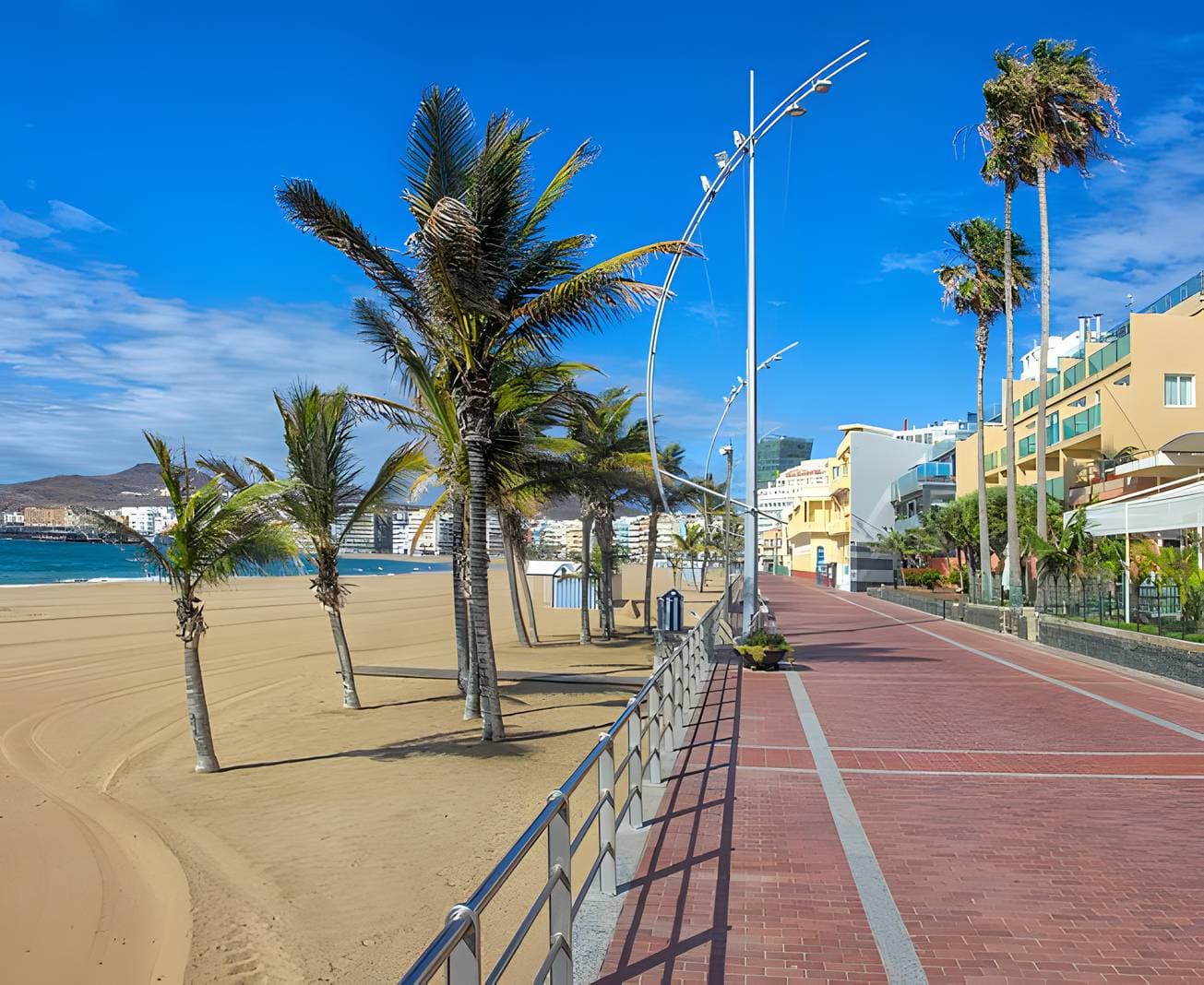
Gran Canaria is often called a miniature continent, and its weather is famously gentle: no real winter, no scorching summer and sunshine in every season. But the island also has microclimates, and Las Palmas, on the north-east coast, has a few quirks worth knowing, like the summer cloud locals call panza de burro. Here is what to expect month by month, based on long-term climate data from AEMET, Spain's state meteorological agency.
The climate in a nutshell
The Canaries sit in the Atlantic off the coast of Africa, cooled by the ocean and by the north-east trade winds. The result is a remarkably stable climate. According to AEMET's 1981–2010 averages for Gran Canaria airport, the island's main reference station on the east coast, average daytime highs range from about 21 °C in January to about 27–28 °C in August, while night-time lows rarely fall below 15 °C. The whole year brings only around 150 mm of rain, almost all of it between October and March.
The sea follows the same pattern with a delay: it is coolest from February to April, at about 19 °C, and warmest in September and October, at around 23–24 °C. In other words, you can swim in any month, although in winter the first plunge can feel brisk. Here are the typical figures for each month (air from AEMET, sea temperatures approximate):
- January: highs around 21 °C, lows around 15 °C, sea about 20 °C, about 3 rainy days.
- February: highs around 21 °C, lows around 15 °C, sea about 19 °C, about 3 rainy days.
- March: highs around 22 °C, lows around 16 °C, sea about 19 °C, longer and sunnier days.
- April: highs around 23 °C, lows around 16 °C, sea about 19 °C, very little rain.
- May: highs around 24 °C, lows around 17 °C, sea about 20 °C, almost no rain.
- June: highs around 25 °C, lows around 19 °C, sea about 21 °C, cloudy mornings become more common.
- July: highs around 27 °C, lows around 21 °C, sea about 22 °C, the heart of the panza de burro season.
- August: highs around 27–28 °C, lows around 22 °C, sea about 23 °C, the warmest month.
- September: highs around 27 °C, lows around 21 °C, sea about 23–24 °C.
- October: highs around 26 °C, lows around 20 °C, sea about 24 °C, the warmest sea of the year.
- November: highs around 24 °C, lows around 18 °C, sea about 22 °C, the first autumn showers.
- December: highs around 22 °C, lows around 16 °C, sea about 21 °C, the wettest month, with 4 to 5 rainy days.
Winter: November to February
This is the season that made the Canaries famous. Daytime highs are typically 21–24 °C, nights 15–18 °C, and the sea is still around 19–22 °C. December is the wettest month, but rainy days remain rare: AEMET records on average just three to five days a month with at least 1 mm of rain in this period, and showers tend to be short, followed by sunshine.
It is the perfect time for long walks on the beach, hiking in the interior and soaking up the light while the rest of Europe is in the dark. Just bring a sweater: evenings by the sea can feel cool in the breeze, and the mountains in the centre of the island can be genuinely cold, occasionally even frosty at the summits.
Spring: March to May
Spring brings longer days, more sunshine and very little rain; by May, rainy days have practically disappeared. Daytime highs climb from about 22 °C in March to about 24 °C in May, while the sea is at its coolest, around 19–20 °C. It is a wonderful season for hiking, cycling and exploring, with the north of the island still green after the winter rains.
The trade winds strengthen as summer approaches, so afternoons on the beach can be breezy. Easter is a popular holiday period, so book early if you plan to travel then.
Summer and the panza de burro
Summer in Las Palmas is warm but rarely oppressive: average highs are around 25–28 °C and the trade winds keep the air fresh, while the sea warms up to 21–23 °C. But while the south of the island bakes in sunshine, the north-east coast, including Las Palmas, often wakes up under a blanket of low grey cloud that locals call panza de burro, or donkey's belly.
This cloud forms when the trade winds push moist air against the island and a layer of warmer air above traps it like a lid. It often thins or breaks up during the day and rarely brings rain, though some days stay overcast. The upside is that it keeps temperatures pleasant; the downside is that you can still get sunburnt underneath it. If you want guaranteed blue skies, a day trip to the south is always an option.
Autumn and the best time to visit
September and October are local favourites: the sea is at its warmest, around 23–24 °C, the summer cloud fades and days are still summery, with highs of around 26–27 °C. The first autumn showers usually arrive from late October, but they tend to be brief.
So when should you come? For warm water and long beach days, September and October are hard to beat. For winter sun and an escape from the cold, November to March offers reliably mild days and is the classic high season. For hiking and quieter beaches, spring is ideal. And if you do not mind the odd cloudy morning, summer is pleasantly warm without the extreme heat of mainland Spain.
What to pack
Packing for Las Palmas is easy: think late spring in southern Europe. Light clothes, swimwear and sandals cover most days all year round. Add a light jacket or sweater for the evenings, especially from November to April, and a windproof layer for breezy days on the promenade. If you plan to hike in the mountains, bring proper shoes and warm layers, as it can be much colder at altitude than on the coast. At home, Morada Mágica has a fan for the warmer days.
- High-factor sunscreen, sunglasses and a hat: the sun is strong even in winter and under cloud.
- Water shoes for the rocky patches of Las Canteras and a mask for snorkeling.
- A light rain jacket is more useful than an umbrella in winter.
- Now and then a calima brings warm, dusty air from the Sahara and hazy skies for a day or two; check the forecast if you have respiratory issues.
Frequently asked questions
What is the weather like in Las Palmas in winter?
Winter in Las Palmas de Gran Canaria is mild and mostly sunny. According to AEMET's long-term averages, daytime highs are around 21–24 °C from November to February and night-time lows around 15–18 °C, with only three to five rainy days per month. The sea stays at around 19–22 °C.
What is the panza de burro?
Panza de burro, meaning donkey's belly, is the local name for the layer of low cloud that often covers the north-east of Gran Canaria, including Las Palmas, in summer. It is caused by the trade winds and a temperature inversion, often thins during the day and rarely brings rain.
When is the sea warmest in Gran Canaria?
The sea around Las Palmas is warmest in September and October, at around 23–24 °C, and coolest from February to April, at around 19 °C.
What is the best month to visit Las Palmas?
It depends on what you are looking for: September and October offer the warmest sea and summery days, November to March is ideal for winter sun, and spring is perfect for hiking. Thanks to its mild climate, Las Palmas is pleasant to visit in any month.